
What Is the Difference Between Marmorino and Travertine Effect?
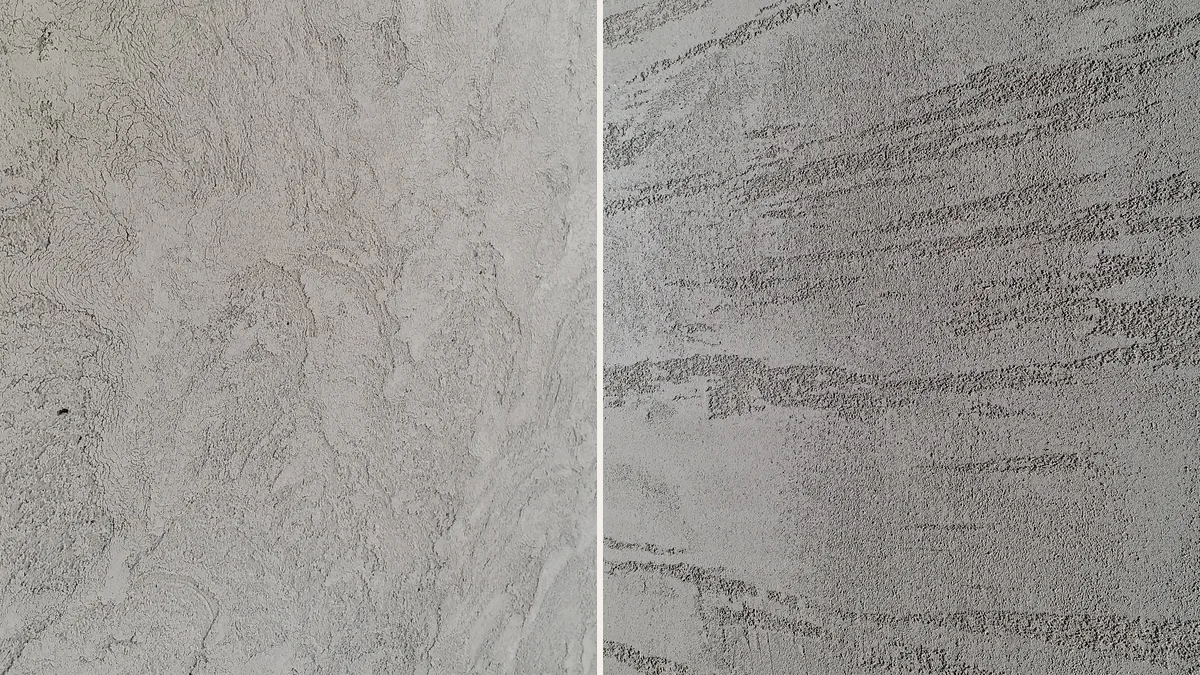
Marmorino gives a smooth, softly glossy surface that recalls polished marble. Travertine effect is matt, porous and horizontally veined, like natural travertine stone. Both are mostly lime-based; the difference comes from the grain size and the way the material is worked.
Marmorino
It is made of lime and fine marble powder. It is applied in thin coats, and the last coat is compressed and burnished with a steel trowel; the tighter the surface, the more it shines. The result is a flat, cool, elegant wall.
Travertine effect
This is a coarser-grained finish applied more thickly. While the material is wet it is dragged with a brush or trowel to form the pores and horizontal lines of the stone. Joints can be scored to give the look of stone blocks.
Which suits where?
- Marmorino: living rooms, entrance halls and columns; it needs a smooth wall.
- Travertine: TV walls, fireplace surrounds and stairwells; its texture hides slight undulations.
Why must the wall be perfectly smooth for marmorino?
Because the coats are very thin and the glossy surface reflects light like a mirror; every hollow, joint and sanding mark underneath shows. That is why the wall is levelled with finishing plaster or filler before marmorino. Erdağ Yapı shows both techniques on samples; details are on our marmorino page.
Değerlendirmeler
Henüz değerlendirme yapılmamış. İlk siz değerlendirin!