
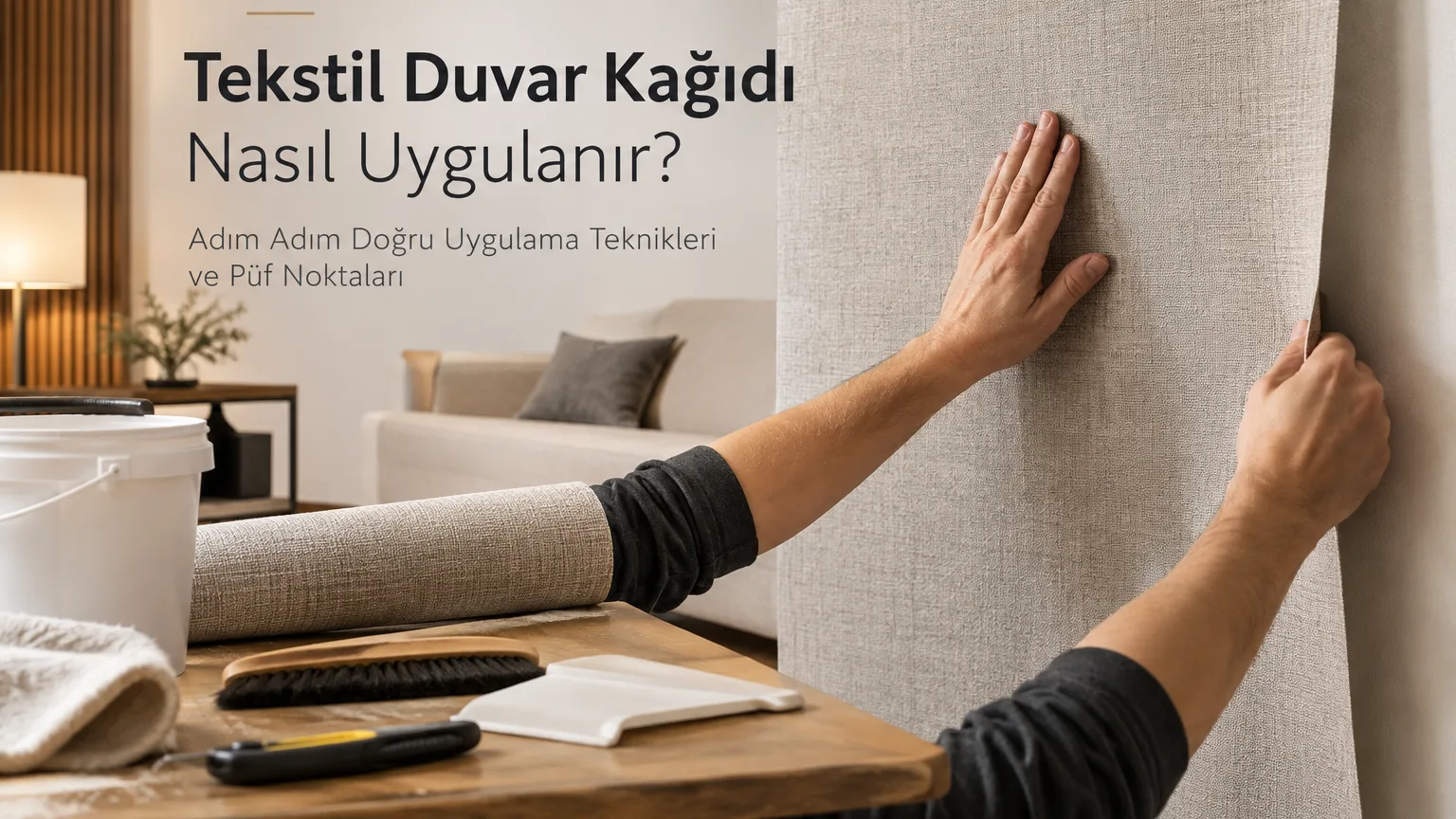
How Is Textile Wallpaper Hung?
Textile wallpaper is hung on a smooth wall primed in one even colour, with the paste specified by the manufacturer, without getting paste on the face and with the strips butted edge to edge. It forgives no mistakes, which makes it the most demanding type of wallpaper to hang.
Preparing the wall
The wall must be dry, flat and free of dust. Some textile wallcoverings are semi-transparent; to stop marks and colour differences showing through, the wall is sealed with a pigmented primer in white or in a shade close to the wallcovering.
Paste and method
The label decides the method: with a non-woven backing the paste goes on the wall, with a paper backing it goes on the back of the paper, which is then left to soak for the stated time. The paste must be applied thinly and evenly; any excess squeezes out at the seam and stains the surface.
What to watch when hanging the strips
- Strips are hung in the order they come off the roll; if the label shows a reverse-hang mark, every other strip is turned.
- The surface is pressed with a soft roller or a clean hand, not a hard plastic smoother.
- The material is never folded sharply; a crease stays in the fabric.
- Cuts are made with a sharp blade that is changed often; a blunt blade pulls the yarns.
- Paste on the face is not rubbed; it is removed at once as the manufacturer advises.
Can I hang textile wallpaper myself?
We do not recommend it. Paste that gets on the face usually cannot be removed and the material is expensive; one spoiled strip affects the whole wall. Erdağ Yapı also hangs textile wallcoverings with experienced installers as part of its wallpaper installation service.
Değerlendirmeler
Henüz değerlendirme yapılmamış. İlk siz değerlendirin!